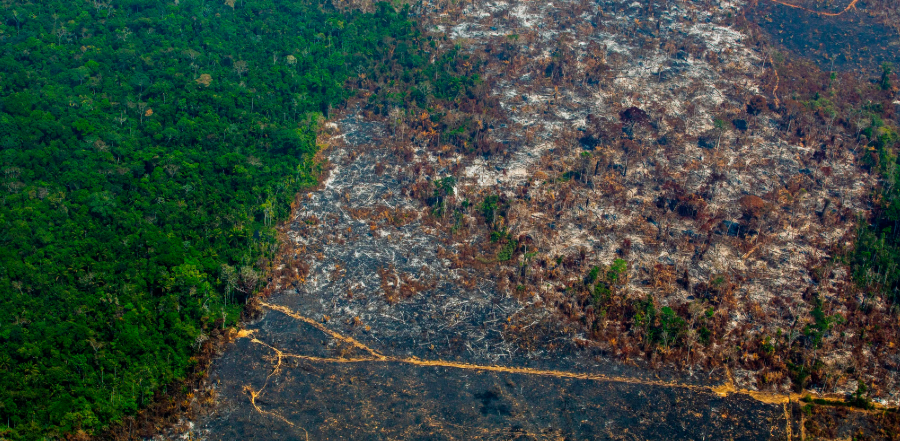
The Amazon rainforest has long been described as the “lungs of the Earth,” a poetic phrase that only begins to capture its true importance. Spanning nine countries and covering more than five million square kilometers, the Amazon is home to unparalleled biodiversity, ancient ecosystems, and millions of people whose lives are deeply connected to the forest. Yet today, the Amazon stands at a crossroads—one that could define the future of the planet itself.
For decades, scientists and conservationists have warned that the Amazon is approaching a tipping point. This is not an abstract theory. It is a measurable reality driven by deforestation, climate change, and unsustainable land use. If current trends continue, large portions of the rainforest may transform into dry savanna within our lifetime, releasing massive amounts of carbon and destabilizing global climate systems.
The Amazon’s Role in the Global Climate
The Amazon does far more than store carbon. It actively regulates weather patterns across South America and beyond. Through a process known as evapotranspiration, trees release moisture into the atmosphere, forming “flying rivers” that influence rainfall thousands of kilometers away. These invisible rivers help sustain agriculture in Brazil, Argentina, and even parts of North America.
When forest cover is reduced, this cycle weakens. Less moisture returns to the atmosphere, rainfall becomes irregular, and droughts intensify. In recent years, the Amazon has experienced record-breaking dry seasons, wildfires, and extreme heat—events once considered rare, now disturbingly frequent.
Even more alarming, studies suggest that some parts of the Amazon are no longer absorbing carbon but emitting it. This shift turns the rainforest from a climate buffer into a climate accelerator.
Deforestation: More Than Just Trees
Deforestation in the Amazon is often framed as a simple trade-off between development and conservation. The reality is far more complex. Large-scale clearing is driven primarily by cattle ranching, industrial agriculture, illegal logging, and mining. Roads carved into the forest open access to deeper regions, triggering further destruction.
But the cost goes beyond lost trees. Each hectare cleared fragments ecosystems, disrupts wildlife migration, and erodes soil health. Rivers become polluted with sediment and chemicals, affecting fisheries and drinking water for downstream communities.
Once degraded, rainforest ecosystems are incredibly difficult to restore. Unlike temperate forests, the Amazon relies on delicate nutrient cycles that collapse when the canopy is removed.
Indigenous Communities at the Frontline
Indigenous peoples have protected the Amazon for thousands of years, often achieving better conservation outcomes than state-managed reserves. Their territories consistently show lower deforestation rates, even under increasing pressure.
Yet these communities are among the most vulnerable. Land invasions, illegal mining, and weak enforcement expose them to violence, displacement, and health risks. Losing indigenous stewardship would mean losing centuries of ecological knowledge—knowledge that modern science is only beginning to understand.
Protecting indigenous land rights is not only a moral responsibility; it is one of the most effective climate strategies available.
Is the Tipping Point Real?
Scientists estimate that if deforestation reaches around 20–25% of the Amazon’s total area, the forest could cross an irreversible threshold. Alarmingly, current estimates place deforestation at roughly 17–18%, with degradation pushing effective impact even higher.
At this point, reduced rainfall and higher temperatures could trigger widespread forest dieback. The Amazon would no longer function as a rainforest at scale, permanently altering ecosystems and weather patterns.
This is why the next decade is critical.
What Can Still Be Done
Despite the urgency, the Amazon’s future is not yet sealed. Solutions exist, but they require coordinated action:
- Stronger enforcement against illegal logging and land grabbing
- Sustainable economic alternatives that do not rely on forest destruction
- Recognition and protection of indigenous territories
- Global accountability, including responsible supply chains and reduced demand for deforestation-linked products
Consumers, governments, and corporations all play a role. Transparency and pressure have already led to improvements in certain regions, proving that change is possible.
Why the Amazon Matters to Everyone
It is easy to see the Amazon as distant—a problem belonging to South America alone. That perception is dangerously wrong. The Amazon influences global climate stability, food security, and biodiversity on a planetary scale. Its collapse would affect weather extremes, sea levels, and ecosystems worldwide.
Saving the Amazon is not about preserving a postcard image of nature. It is about maintaining a living system that supports life far beyond its borders.
The question is no longer whether the Amazon is in danger. The question is whether the world will act in time.
